
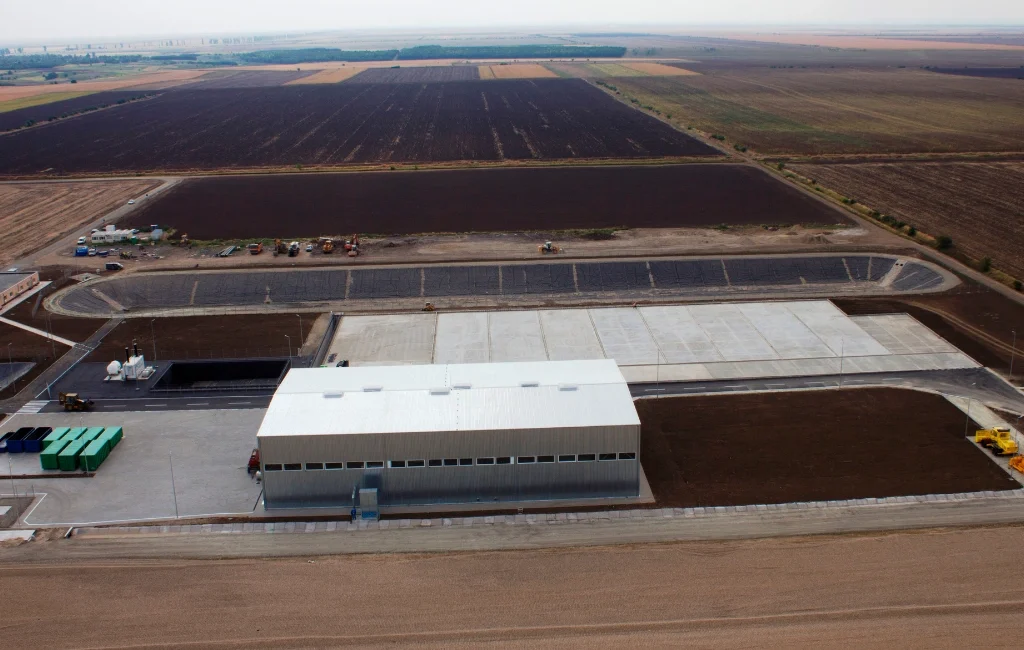
Integrated Waste Management Center (CMID): what it is and how it works
When we talk about waste, we usually only think about collection and the garbage that ends up in landfills. In reality, behind this process there is an entire system that tries to reduce the amount of waste sent to landfills and recover as much as possible from what we throw away.
One of the most important components of this system is the integrated waste management center, abbreviated as CMID. Although the term sounds technical, the idea behind it is relatively simple: managing waste in an organized manner, in one place, through several processes that work together.
What is an integrated waste management center?
An integrated waste management center is a site where waste collected from an area (city, county, region) is brought and where it is sorted, treated, and sent onward, depending on its type.
The idea of "integrated" means that we are not talking about a single installation, but about several processes that are carried out in a coordinated manner:
separation of recyclable waste,
treatment of biodegradable waste,
preparation of waste that cannot be recovered,
reducing the quantity that ultimately ends up in storage.
Why waste storage is no longer sufficient
In the past, the simplest solution was storage. Today, this approach is no longer sustainable. Landfills are filling up, costs are rising, and the environmental impact is significant.
A CMID is the answer to these problems. It allows:
reducing the amount of waste sent to landfill,
recovery of recyclable materials,
separate treatment of biodegradable waste through composting,
compliance with environmental requirements.
How waste ends up in a CMID
The process begins in communities, with waste collection. After collection, waste is transported to the integrated management center. Here, waste is not simply discarded, but enters a well-established flow.
Each type of waste is treated differently, depending on its characteristics.
What happens to waste in an integrated management center
Once it gets to the CMID, the waste goes through a bunch of steps.
First, sorting takes place, where recyclable materials are separated from the rest of the waste. This can be done manually, mechanically, or through a combination of technologies.
Then, biodegradable waste is sent to dedicated facilities, usually composting plants. Here, the composting process takes place, transforming this waste into a stable material called compost.
Waste that cannot be recovered is treated or prepared for controlled disposal in conditions that are safe for the environment.
What is composting and why is it important in a CMID?
Composting is the process by which organic waste is decomposed under controlled conditions. In a CMID, composting is essential because the biodegradable fraction represents a significant part of municipal waste.
Without composting, this waste would end up in landfills, where it would generate emissions and environmental problems. Through composting, it is treated separately and transformed into a product that can be used later.
What components does a CMID usually have?
An integrated waste management center does not look the same everywhere, but generally includes:
sorting areas and halls,
composting facilities,
transfer and storage spaces,
technology platforms,
access infrastructure and utilities.
All these elements must work together as a system.
The role of technological integration and expertise
Therefore, when implementing a CMID, it is important that the infrastructure, equipment, and operating mode are designed together. Technological integration ensures that the system works not only on paper, but also in practice.
In Romania, the development of integrated waste management centers has led to the accumulation of significant expertise in this field, both in terms of design and implementation.
CMID as part of the environmental infrastructure
Integrated waste management centers are part of the environmental infrastructure of a region. They are not isolated projects, but key elements of a broader waste management system.
By correctly implementing a CMID, authorities can take an important step towards a more efficient and accountable waste management system.
An integrated waste management center is essentially a place where waste is managed intelligently. Through sorting, composting, and controlled treatment, the CMID reduces environmental impact and promotes more efficient use of resources.
The proper functioning of a CMID depends on how all stages of the process are designed and integrated, from collection to final waste treatment.
For further information about environmental infrastructure projects, the Inoveco SRL team can provide details at marketing@inovecoexpert.ro.